What Is an Ice Dam and How Does It Form?
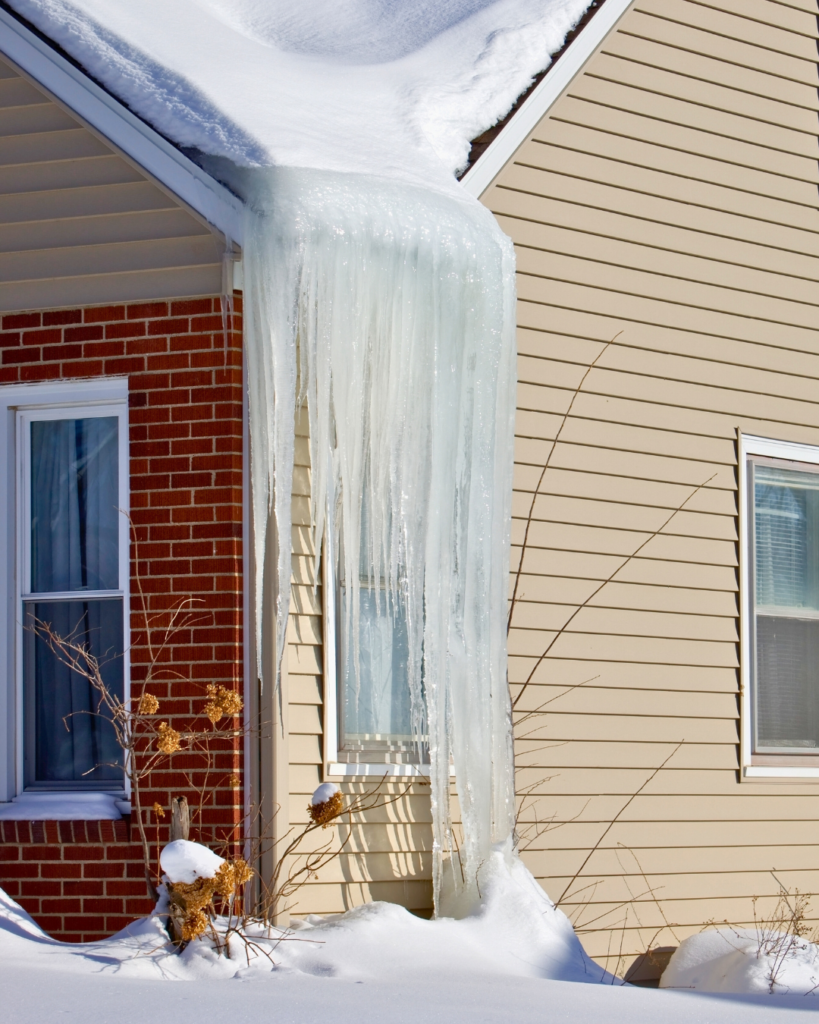
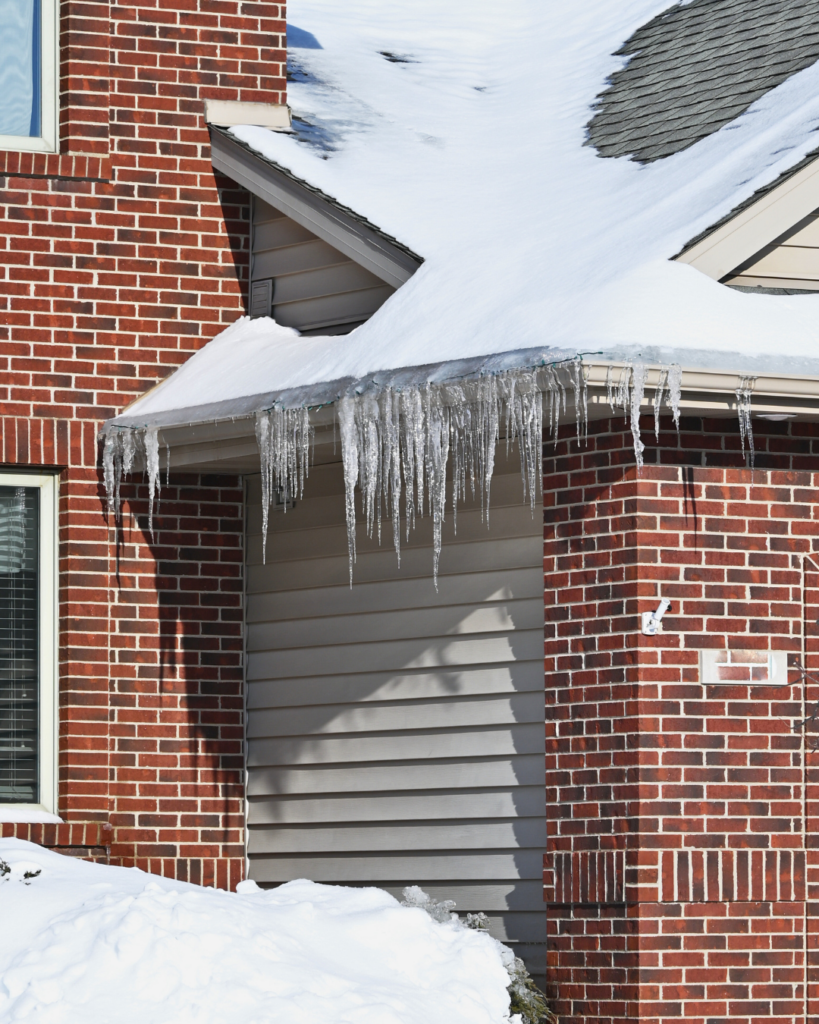
Ice dams are accumulations of ice that typically develop along roof overhangs, preventing the normal flow and drainage of melting snow. This buildup can force water into the attic space and eventually into interior walls and ceilings, leading to material deterioration and potentially compromising the building’s structural integrity.
Not all buildings are affected the same way. Ice dam formation depends on several technical factors, including insulation, ventilation, and roof design. Understanding these elements is essential for anticipating risks and planning effective interventions.
Technical Factors Contributing to Ice Dam Formation
Insufficient Insulation
When a building’s ceiling is poorly insulated, warm and humid indoor air can rise into the attic. This warms the upper portion of the roof, causing snow to melt. The meltwater then flows downward and refreezes at the colder roof edges, forming an ice dam.
Inadequate Ventilation
Insufficient ventilation prevents residual heat from escaping the attic. As heat accumulates, it increases the temperature of the roof deck and accelerates snowmelt. The lack of ventilation also traps moisture, promoting condensation inside the attic.
Roof Design and Overhangs
Roof overhangs extend beyond the insulated walls and therefore remain significantly colder than the rest of the roof. Meltwater flowing toward these areas tends to freeze, increasing the likelihood of ice dam formation, water infiltration, and long‑term structural issues. A thorough technical assessment can identify the exact contributing factors and guide the required corrective actions. Proper design aims to maintain similar temperatures between the attic and roof edges through adequate ventilation.
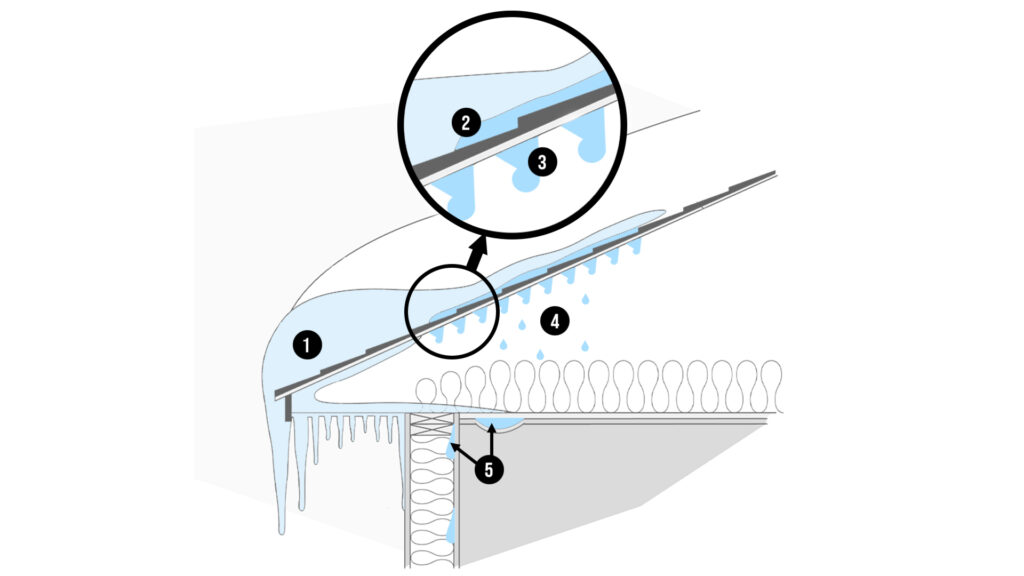
- Formation of an ice dam along the roof overhang
- Accumulation of meltwater trapped behind the ice
- Penetration of meltwater beneath the shingles when ice blocks the drainage
- Infiltration of water into the attic and migration toward vulnerable areas
- Spread of water into wall cavities and ceilings, causing various types of damage
Impacts on Buildings
Water Infiltration Into the Attic and Structural Components
Ice dams can cause water to penetrate the attic, structural framing, ceilings, and exterior walls. This often leads to wood rot, deterioration of gypsum boards, and weakening of load‑bearing components.
Deterioration of Building Materials
Ice and moisture can significantly damage construction materials. Shingles, membranes, and exterior finishes may warp, crack, or detach, reducing the roof’s overall durability and performance.
Condensation and Moisture Problems
Excess moisture encourages condensation, which can lead to mold and fungal growth. Beyond damaging structural materials, this can affect indoor air quality and pose risks to electrical and mechanical systems.
Technical Solutions to Reduce Ice Dams
Mitigation strategies fall into two categories: temporary measures that address the effects, and permanent solutions that resolve the underlying causes.
Temporary Measures
Heating cables installed along roof overhangs can reduce ice accumulation during mild winter periods. While useful as a short‑term measure, they do not address the root cause of the issue and should be considered an interim or a complementary solution.
Permanent Solutions
Long‑lasting corrections focus on improving the building envelope:
- Improving insulation to reduce heat loss into the attic
- Ensuring adequate ventilation throughout the entire attic space to balance temperatures between the attic and the roof overhangs
- Limiting moisture migration from inside the building
- Correcting the vapor‑barrier discontinuities to limit moisture migration from inside the building
These measures must be based on a comprehensive technical assessment to ensure long‑term prevention of infiltration, condensation, and structural damage.
When to Consult an Expert
If you notice ice dams or experience water infiltration during winter thaws—or if you simply want a clearer understanding of the risks affecting your roof—consulting a specialized engineer can help identify the causes early and prevent more significant damage. A technical evaluation will pinpoint the source of the problem, provide tailored recommendations, and help plan durable solutions to protect the building’s structure and long‑term performance.

Director of the Civil Engineering Department, Engineer, M.Sc.